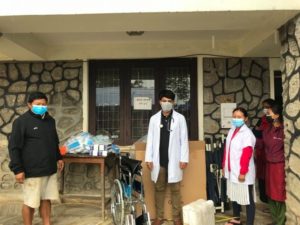
Gorkha Health Posts Project was successfully implemented on June 25-26, 2021. This project aimed to support local health centers in Gorkha that had closed because they lacked the means to test or care for COVID patients. As a result, many...
Read MoreMission
Socio-economic empowerment of rural communities in Nepal.
Vision
Healthy and prosperous rural communities.
About Us
Abiral Foundation was conceived during our relief efforts for 2015 Nepal earthquake, after we witnessed dire socio-economic conditions in rural communities. It started with an idea of working at the community level by incorporating sustainable methods. Shortly after the earthquake, from 2015 through 2016, we worked under the organization named Alliance for Health Aid and Awareness (AHAA) that conducted health missions in Nepal’s rural areas to improve healthcare affordability and accessibility.
Our Approach
We are systems thinkers, so we plan our interventions after careful assessment of the underlying socioeconomic issues, such that, in addition to improving the target issue, they also benefit other sectors crucial for sustainable development. Sustainability is central to our work- our interventions are designed for long term impact, and we ensure our efforts can be continued by rural communities. To evaluate the effectiveness of our interventions, we measure the impact of our interventions, and when shortcomings are found, we adjust our approach. During our field works, whenever it is possible, we collect data on socio-economic and health indicators and make them publicly available for research purposes.
Centre for Sustainable Development Research (CSDR)
Nested within Abiral Foundation Nepal, the Centre for Sustainable Development Research (CSDR) is a consortium of development experts, thoughts leaders, and change-makers to propel the sustainable development efforts in Nepal.
Our Projects
Rural Health
We conduct health camps, which feature free health screening, treatments, medications and health education. Generally, we allow the collaborating healthcare facilities to promote themselves during our health camps, and in return, they agree to provide us a medical team for our health camps. We also negotiate with partner hospitals to reduce the cost of invasive treatment and hospitalization required for critically ill patients we encounter during our field work. Because health camps alone are not sustainable, we mainly use them as an incentive for rural residents to attain our health education sessions and community meetings.
Chandrauta Eye Camp
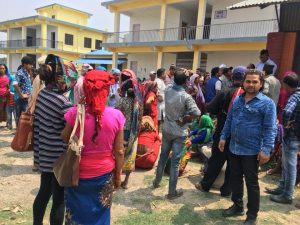
It is our pleasure to inform you the overall outcome of the Chandrauta Eye Camp organized on April 11-12, 2018 exceeded our expectations. On the first day of our mission, a staggering crowd of 817 people showed up for the...
Read MoreJajarkot Health Camp
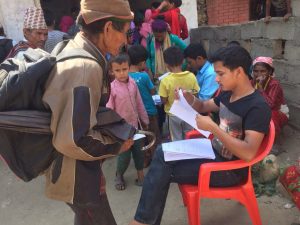
Our Thala, Jajarkot Health Camp, conducted on June 17 2017, resulted into quite propitious outcomes. We examined 600 Jajorkot residents (mostly who had never consulted specialists), gave away free medications and disseminated information about water sanitation and hygiene. With careful...
Read MoreGhusel Health Camp
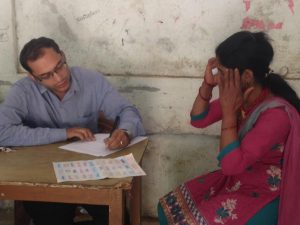
Our first health camp organized on April 24, 2016 in Ghusel, Lalitpur, in collaboration with Kathmandu Rotary Club and Alka Hospital, was a huge success. We screened 192 Ghusel residents, provided free medications and most importantly steered them to the...
Read MoreWomen Empowerment
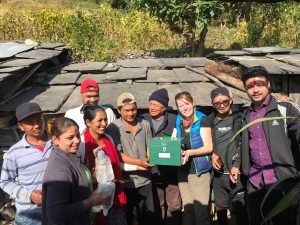
As per the United Nations, a dollar investment in female’s education and women’s employment can return $5 and $7 respectively to the economy. Their literacy and income-generating capacity significantly determine their status in their household and community. That is why we team up with experts to train women for useful skills, help them establish small scale businesses and define the market for their enterprises. To synergize the impact of women’s employment, we work with communities to promote education for girls.
Economic Growth
Agriculture accounts for approximately one-third of Nepal’s GDP and provides livelihood for two-third of Nepal’s population. However, limited access to improved seeds, new technologies, and market opportunities have taken a huge toll on rural economies. We partner with experts to evaluate rural farming practices and train them to boost their agricultural yields. The employment opportunities we create to empower women also contributes to the local economy.
Myagdi Agriculture Development
Our team of 5 personnel made a week-long journey to Myagdi on November 9, 2019, conducted agricultural training sessions in...
Read MoreApun Road Construction
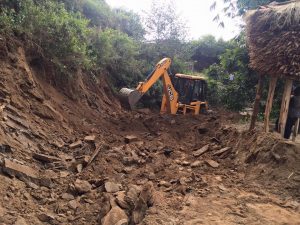
To facilitate the access to Apun, Gorkha after the April 2015 earthquake, Abiral Foundation constructed a 2.5 km road that...
Read MoreEducation
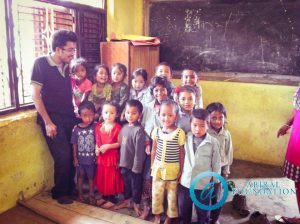
One of the major barriers to education in rural areas is the scarcity of qualified teachers. We collaborate with top-ranked schools and organize workshops for rural school teachers to acquire effective teaching skills. These workshops also allow rural schools to adopt and integrate competitive curriculum that train rural students to succeed in higher level studies. We also fund rural schools for infrastructure development. Our effort to promote girls’ education, one of our strategies for women empowerment, increases the overall school enrollment rate and contributes to the financial stability of rural schools.
Kafaldada School Library Project
Abiral Foundation realizes books are the greatest source of wisdom, and wisdom leads to better decisions. We believe investment in...
Read MoreContact Us
Got questions or comments? Please complete the form below, and we will get back to you shortly.


